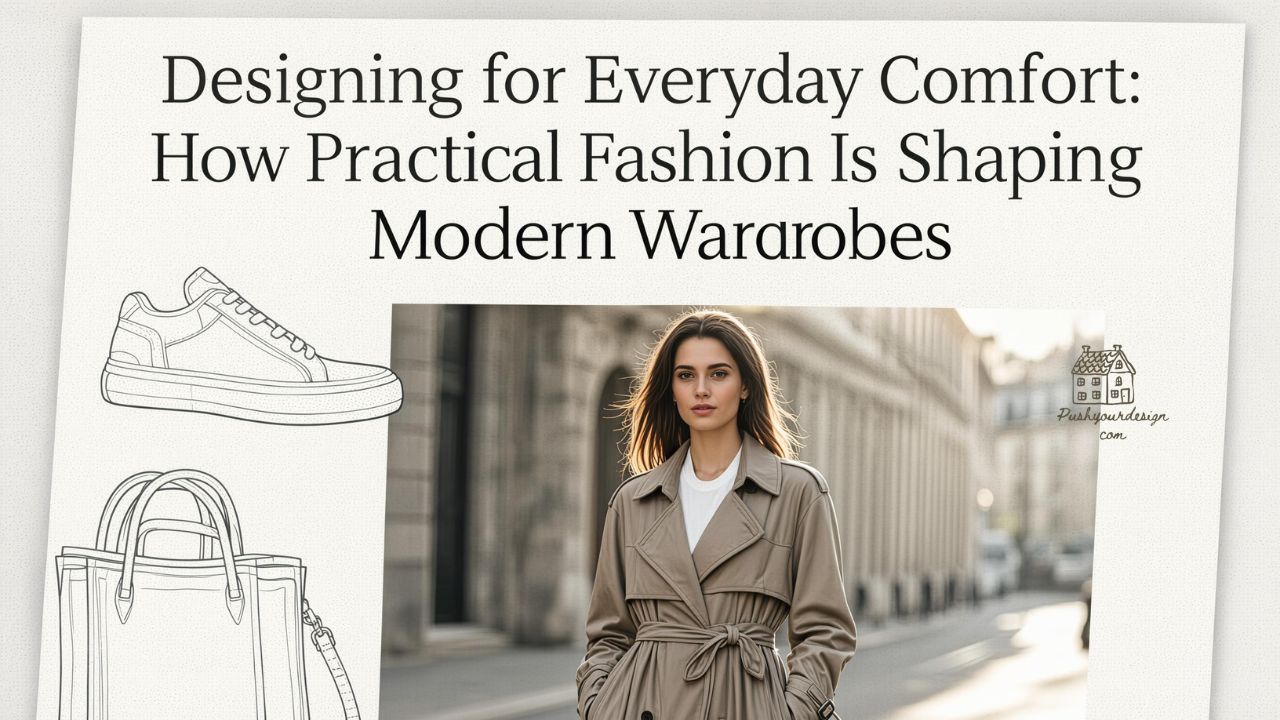
Fashion trends have taken a comfortable turn as practicality becomes the new chic. Whether it’s athleisure, work-from-home attire, or innovative fabrics designed for ease, today’s clothing choices prioritize comfort without compromising on style. To stay updated with the latest deals on such versatile trends, check out options with a Cotton Traders Discount Code.
For a related practical reference on desktop video editing, see capcutguide.com.
The Rise of Practical Fashion
Practical fashion didn’t appear out of nowhere—it showed up the same way all good wardrobe changes do: slowly, then all at once. Over the last decade, everyday life has been getting more fluid. Work isn’t always “at work,” weekends bleed into weekdays, and people move between errands, meetings, school runs, and social plans without a clean outfit-change moment in the middle. So clothing had to catch up.
Evolution of Fashion Needs
The biggest shift is simple: comfort stopped being something you changed into after hours. Remote work normalized the idea that you can be productive without stiff trousers and structured blazers. Even when offices reopened, dress codes didn’t fully snap back. “Smart casual” became looser, and “casual” became… basically the default.
But it’s not just WFH. Modern wardrobes are reacting to:
- Busier, modular days: People want outfits that multitask—walkable shoes, layers that work indoors and out, fabrics that don’t wrinkle on sight.
- A more honest relationship with clothes: If something pinches, rides up, or needs special handling, it gets worn less. Consumers are over high-maintenance pieces that look good only under perfect conditions.
- Health and movement awareness: Stretch, breathability, and ease of motion aren’t “athletic” needs anymore—they’re normal needs.
In other words: fashion got less performative and more usable. And that’s not a downgrade. It’s a correction.
Athleisure Explosion
Athleisure is the headline act of this whole comfort-first era. It’s the merging of athletic wear (built for movement) with leisurewear (built for living). Leggings with real fabric weight, joggers that don’t look like gym leftovers, sneakers you can wear with almost anything, polos and half-zips that sit between sporty and put-together.
What made athleisure explode wasn’t just trendiness—it was proof. People tried clothes designed to stretch, breathe, and handle real life, then realized they didn’t want to go back. The “new chic” became looking like you could leave the house at any moment and still feel good in what you’re wearing.
Athleisure also rewired style expectations. It made comfort visible—part of the outfit, not hidden underneath it. Clean lines, neutral tones, minimal branding, better fits: the category matured. Now it’s less “gym look” and more “everywhere uniform,” which is exactly why it stuck.
Practical fashion is rising because it earns its place. It doesn’t ask you to suffer for style—it asks why you ever did.
Key Elements of Practical Fashion
Practical fashion works because it nails two things at once: how clothes feel and how they function. The aesthetic can be minimal, sporty, or even tailored—but the baseline expectation now is wearability. No drama. No suffering for the look.
Comfortable Fabrics
Fabric is where comfort starts, and brands have gotten smarter (and more honest) about what people actually want to wear all day.
- Cotton and cotton blends: Still the everyday hero. Breathable, soft, familiar. Blended versions (cotton + a bit of polyester or elastane) hold shape better and wrinkle less, which matters when your “iron” is basically a chair.
- Lycra/elastane stretch: A small percentage goes a long way. Stretch in jeans, trousers, tees, and waistbands means clothes move with you—sitting, commuting, living—without looking like gym gear.
- Performance fabrics without the “techy” look: Moisture-wicking, quick-dry, four-way stretch, anti-odor. These used to scream “workout.” Now they’re built into everyday silhouettes: polos, button-ups, wide-leg pants, even blazers.
- Sustainable comfort materials: Organic cotton, TENCEL™/lyocell, bamboo-viscose blends, recycled synthetics. Part of the appeal is ethical, sure—but also practical: many of these fabrics are naturally soft, breathable, and drape well.
The shift isn’t just “soft = good.” It’s soft plus resilient. People want clothes that survive repeat wears and frequent washes without turning into sad, stretched-out versions of themselves.
Functional Design
Practical fashion isn’t only about fabric. It’s also about the little design decisions that make you reach for the same pieces again and again.
- Real pockets (and more of them): Deep pockets, zip pockets, hidden inner pockets—especially on dresses, skirts, joggers, and jackets. Because carrying half your life in your hands is not a lifestyle.
- Adjustable waistbands: Drawstrings that don’t look childish, elastic panels that sit flat, hybrid waistbands that feel like loungewear but pass as “proper” trousers. Quietly life-changing.
- Ease-of-wear construction: Stretch panels, relaxed fits, side slits, raglan sleeves, non-restrictive armholes. The stuff you don’t notice until you wear something that fights you all day.
- Easy-care features: Machine-washable, crease-resistant, stain-repellent, quick-drying. Modern wardrobes are built for limited time and zero patience for delicate labels.
- Layer-friendly cuts: Slightly roomier shackets, longer tees, lightweight knits, breathable base layers. Practical style often comes down to being able to adapt to temperature swings without changing outfits.
Put simply: practical fashion respects your day. It’s clothing designed for real schedules—work, errands, travel, weather, sitting, moving—while still looking intentional. The goal isn’t to dress down. It’s to dress smart.
Influences on Modern Wardrobes
Celebrity Endorsements
Comfortable fashion didn’t sneak in through the side door. It got waved through by celebrities, stylists, and influencers who started treating “off-duty” looks like the main event. When actors wear relaxed trousers, clean sneakers, and oversized knits to premieres and paparazzi shots, it sends a simple message: looking put-together doesn’t require feeling restricted.
Social media accelerates that effect. A single “get ready with me” can normalize things like matching lounge sets, wide-leg joggers, or performance fabrics worn as everyday basics. The shift is subtle but real: the fashion ideal moved from impressive to usable. People still want style, but they want it to work in real life—school runs, commutes, travel days, long meetings, quick errands. If a look is easy to copy and comfortable to live in, it spreads.
And brands pay attention. Once high-visibility people started repeating the same practical pieces (rather than constantly rotating “statement” outfits), it validated re-wearing, outfit formulas, and capsule-style shopping. That’s a big cultural change disguised as a cozy hoodie.
Sustainability Concerns
The other strong force is environmental awareness—less about being perfect, more about being smarter. Shoppers are increasingly wary of fast, flimsy clothing that looks fine on day one and gives up by day ten. Practical fashion fits sustainability naturally because it leans toward durability, repeat wear, and versatility—the exact things that cut down waste.
Instead of buying for a single occasion, people look for items that can do multiple jobs: a shirt that works for video calls and weekends, trousers that stretch but still look sharp, outerwear that handles unpredictable weather. The goal is fewer pieces, worn more often, with better longevity. That’s not just an eco-driven choice—it’s also a budget and mental-load choice. Less clutter, fewer “nothing to wear” moments, more outfits that actually earn their place.
In short: modern wardrobes are being shaped by two loud signals—public figures making comfort look valid, and consumers wanting clothes that last longer than a trend cycle. Practical is no longer the compromise. It’s the point.
Practical Fashion in Retail
Retail didn’t discover practical fashion—customers forced the issue. When people started living in joggers, commuting less, and caring more about cost-per-wear, brands had two choices: adapt fast or end up as “special occasion” clothing that rarely leaves the hanger.
Retailers Adapting to Trends
Most retailers are now building collections around how clothes behave in real life, not just how they look on a product page.
- Design shifts you can feel: stretch woven trousers that pass for “smart,” softer waistbands, wider fits that don’t pinch, and fabrics that don’t wrinkle if you sit like a human. The goal is simple: comfort without announcing “I gave up.”
- Function gets baked in: pockets that actually hold a phone, zips that don’t snag, layers that work across temperatures, and materials that can take frequent washing. These aren’t gimmicks anymore—they’re table stakes.
- Faster feedback loops: practical pieces sell steadily, so brands are watching returns, reviews, and “most re-ordered” data to tweak fits and re-issue bestsellers in new colors. It’s less runway, more real-time iteration.
- Merchandising changes: stores and sites are grouping items by use case—travel, dog-walk, office days, weekend—because shoppers aren’t building outfits for a fantasy life. They’re dressing for Tuesday.
As Tom Church, Co-Founder of LatestDeals.co.uk (a discount code platform), puts it: “People aren’t buying clothes for one perfect occasion anymore — they want pieces that earn their place in the wardrobe. Comfort, durability, and value are what shoppers look for first, and that’s exactly what retailers are building around.”
Marketing Strategies
The messaging has shifted too. Retail marketing used to say “Look at this.” Now it’s closer to “Live in this.”
- Comfort as a feature, not a confession: brands talk about stretch, breathability, and softness the way tech brands talk about battery life—clear benefits, minimal fluff. You’ll see phrases like “all-day wear,” “easy care,” and “moves with you,” because that’s what people are searching for.
- Aesthetics still matter: practical fashion gets sold with clean silhouettes, neutral palettes, and “polished casual” styling. The trick is making comfort look intentional—so a hoodie reads “sleek,” not “sloppy.”
- Proof over promises: close-up fabric shots, fit videos on different bodies, and creators doing try-ons while walking, sitting, and moving. It’s not just “here’s the outfit,” it’s “here’s how it behaves.”
- Value framing: retailers push versatility—one piece, multiple settings. The pitch is essentially: fewer items, more wear. That lands especially well when budgets are tight and sustainability is on people’s minds.
- Deal culture fits the trend: practical wardrobes are built through repeat buys—tees, chinos, knitwear, trainers—so discount codes, bundles, and seasonal promos become part of the strategy. It’s easier to commit to “everyday upgrades” when the price feels reasonable.
Retail is responding to a basic truth: if something isn’t comfortable, washable, and flexible enough for real schedules, customers won’t just dislike it—they’ll ignore it. Practical fashion isn’t being marketed as a compromise anymore. It’s being marketed as the new standard.
Embracing Versatility
Versatility is the quiet flex of practical fashion. It’s not about owning more clothes—it’s about owning clothes that do more. The goal: pieces that can handle school runs, meetings, errands, dinner, and a last-minute plan without you needing a full outfit change (or a lie-down).
From Day to Night
The easiest “day to night” trick isn’t sequins. It’s choosing a base that looks intentional in daylight and still holds up after 7 p.m.
A few reliable transitions:
- Tailored joggers or smart trousers + clean knit: In the day, it reads polished-comfy. At night, swap trainers for loafers or boots and add a sharper layer (blazer, leather jacket, long coat).
- Midi dress in a forgiving fabric (jersey, cotton blend, rib knit): Daytime with a denim jacket and flats; evening with a belt, bolder earrings, and a structured bag. Same dress, different energy.
- Matching sets (co-ord knit, relaxed suit, elevated lounge set): Sets look “styled” even when they feel like pajamas. Wear together for instant outfit credibility, or split them up when you want variety.
- A great overshirt or chore jacket: Works open over a tee during the day, then buttoned up like a shirt-jacket later. Bonus: pockets.
What makes these pieces work isn’t magic—it’s simple shapes, solid colors, and fabrics that don’t wrinkle, cling, or quit halfway through the day.
Mix and Match
Capsule wardrobes get hyped because they’re practical, but the real win is decision-making. When most of your clothes play nicely together, you spend less time thinking and more time, you know, living.
A low-effort capsule strategy:
- Start with 2–3 neutrals you actually wear (black, navy, cream, olive, grey—pick your team).
- Choose tops that can layer (tees, long-sleeves, knits) and bottoms that can repeat (straight-leg jeans, wide-leg trousers, a skirt you can walk in).
- Add one “hero” layer that upgrades everything: a blazer, trench, bomber, or cardigan with structure.
- Keep shoes tight: one clean trainer, one smarter flat/loafer, one boot. That’s most weeks covered.
And here’s the casual truth: repeating outfits isn’t a failure. It’s a system. Practical fashion is basically permission to stop treating getting dressed like a daily reinvention project—and start treating it like a toolkit.
What’s Next for Fashion?
Practical fashion isn’t going away—it’s getting upgraded. The next wave looks less like “comfy basics” and more like clothing that quietly works harder: better materials, smarter construction, and fewer pieces that do more jobs.
As Tom Church, Co-Founder of LatestDeals.co.uk (the discount code platform), puts it: “Shoppers are getting much more selective—people want clothes that feel comfortable, last longer, and work across more parts of their week, not just one occasion.”
Future Trends: comfort, but engineered
Expect fabrics to keep evolving in three directions: performance, care, and climate.
- Performance without the gym look: Stretch, breathability, and wrinkle resistance will keep moving into everyday silhouettes—think trousers that feel like joggers, blazers with give, and shirts that don’t punish you for sitting down.
- Low-maintenance everything: More interest in anti-crease, quick-dry, odor-resistant, and stain-shedding finishes—because nobody wants “special care” instructions on a Wednesday.
- Temperature-smart dressing: As weather gets less predictable, we’ll see more lightweight layering pieces and fabrics designed to regulate heat (cool-touch weaves, insulating-but-thin knits, and linings that don’t trap you).
On the tech side, the changes will likely be subtle but real. Not everyone wants a “smart jacket,” but plenty of people want better outcomes: seams that don’t rub, waistbands that adjust without looking sporty, and materials that move like athleticwear while looking like proper clothing. We’ll also see more brands testing made-to-order and fit-personalization, not as luxury, but as a way to reduce returns and waste.
Consumer Preferences: fewer regrets, more repeat-wears
The big shift is that shoppers are learning what they actually wear. The average closet has had its reckoning, and the winners tend to be pieces that are:
- Versatile (works across errands, work calls, travel, dinner)
- Durable (holds shape, doesn’t pill immediately, survives washing)
- Easy to style (neutral palettes, simple cuts, layers well)
- Comfort-first (not “tight but worth it”—just comfortable)
In the coming years, “fashionable” will increasingly mean functional by default. People will still want personality—color, texture, a strong shoe, a sharp jacket—but they’ll build it on a foundation of clothes that don’t fight their schedule. The vibe is less “new outfit for every plan,” more “one solid outfit that can handle the whole day.”
Taking Advantage of Practical Fashion
Practical fashion is only “expensive” if you buy it like a trend—random pieces, last-minute, full price. Buy it like a system, and it gets cheaper fast.
Why Practical Fashion Gets Cheaper (When You Plan It)
Instead of shopping reactively, treat your wardrobe like a set of repeatable outfits. A little planning helps you:
- avoid impulse buys you don’t actually wear
- wait for predictable discounts
- spend more only where longevity matters
Budget-Friendly Options
Start with timing and a little patience. Most brands cycle discounts constantly, including:
- mid-season sales
- end-of-line clearouts
- multi-buy offers
It’s worth building a short wishlist and waiting for the price to dip. Discount codes can help too—especially for basics you’d buy anyway (tees, joggers, knitwear, layers).
How to Use Deals the Right Way
The trick is to use deals to finish a wardrobe plan, not to start one.
A practical way to shop:
- Make a list of gaps
- e.g., “two comfy tops for work calls”
- “one pair of trousers that aren’t jeans”
- “a warm layer for school runs”
- Prioritize repeat-wear items over “nice to have” statement pieces
- Filter for easy-care
- machine washable
- minimal ironing
- fabrics that hold their shape
That last point matters: saving money upfront doesn’t help if you pay later in time and hassle.
Investment Pieces
Spend more where comfort and durability actually matter. Investment doesn’t mean luxury—it means buying the version that won’t sag, pill, twist, or lose shape after a few washes.
Worth Paying For
- A great everyday trouser
- elastic or adjustable waist
- decent fabric weight
- pockets that work
- Footwear you can walk in
- supportive insoles
- breathable materials
- solid soles
- A reliable outer layer
- lightweight waterproof, warm overshirt, or coat that layers over everything
- Core basics that last
- tees and knits with good stitching
- fabric recovery (so they bounce back instead of bagging out)
A Simple Rule to Keep Costs Down
- Save on items you can replace easily (like basic tees).
- Invest in items you’ll wear hard (trousers, shoes, outerwear).
That’s how practical fashion stays comfortable and smart for your wallet.