
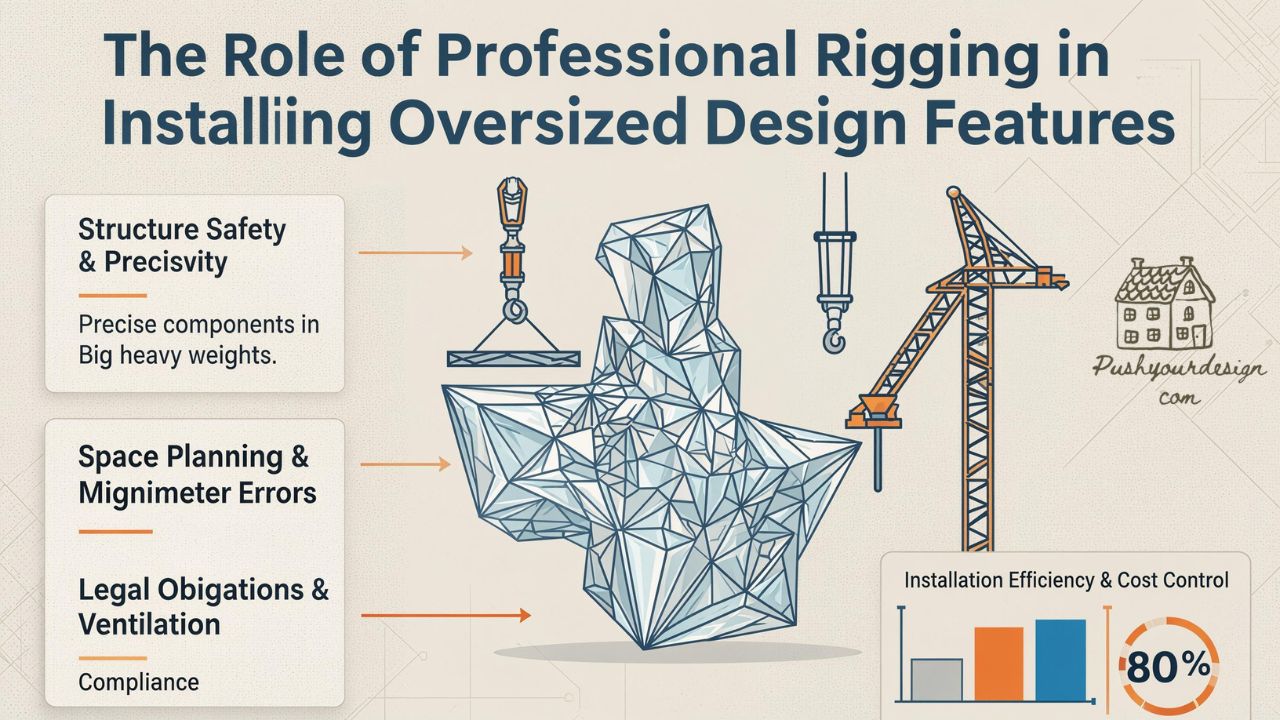
In today’s design world, bigger, bolder, and more custom elements are defining high-end spaces. From floor-to-ceiling glass panels and oversized stone countertops to suspended staircases and large sculptural lighting, modern design is pushing the limits of what can be installed in a home or commercial space. What often goes unseen, however, is the critical role professional rigging plays in making these installations possible.
Behind every seamless installation of a massive design feature is a carefully planned lifting operation, supported by specialized rigging equipment, experienced crews, and precise execution. Without it, many of today’s most impressive design concepts would be infeasible.
Why Oversized Design Features Require Rigging
Oversized elements are not just large; they are often heavy, fragile, and difficult to maneuver. A single slab of marble for a waterfall island can weigh from several hundred to thousands of pounds. Large glass panels used in modern facades are not only heavy but also extremely delicate. Steel beams for open-concept interiors require both strength and precision during placement.
Traditional installation methods are insufficient for these materials. Professional rigging ensures that each piece is lifted, positioned, and secured without damaging the material or the surrounding structure.
Rigging teams evaluate load weight, center of gravity, lift points, and environmental constraints before any lift begins. This planning phase enables designers to confidently incorporate oversized features into their projects.
Common Oversized Features That Require Rigging
Design trends continue to favor statement pieces that require advanced lifting solutions. Some of the most common installations that rely on rigging include:
- Large stone slabs for countertops, walls, and floors
- Structural steel beams for open layouts and exposed designs
- Floor-to-ceiling glass panels and curtain walls
- Custom staircases and floating stair systems
- Oversized chandeliers and suspended lighting fixtures
- Prefabricated architectural elements
Each of these features presents unique challenges, ranging from weight distribution to limited access points within a building.
Key Rigging Equipment Used in Design Installations
Professional rigging is not just about lifting heavy objects. It is about using the right tools for the job to ensure safety, control, and precision. Several essential pieces of equipment are commonly used when installing oversized design features.
Slings and Lifting Straps
Synthetic slings and wire rope slings are widely used to secure loads during lifting operations. Synthetic slings are especially useful for handling delicate materials such as glass or finished stone because they reduce the risk of surface damage. Wire rope slings, by contrast, provide greater strength for heavier structural components.
Chain Hoists and Lever Hoists
Chain hoists allow crews to lift heavy loads vertically with controlled motion. Lever hoists are often used for fine adjustments, especially when aligning a feature into its final position. These tools are critical when precision matters, such as when installing a floating staircase or aligning steel beams.
Spreader Bars
Spreader bars help distribute a load’s weight evenly across multiple lifting points. This is especially important when lifting long or fragile items, such as glass panels or large stone slabs. By preventing bending or stress, spreader bars protect both the material and the rigging system.
Vacuum Lifters
For glass installations and polished stone surfaces, vacuum lifters are essential. These devices use suction to securely grip smooth surfaces without causing damage. They provide excellent control during placement, especially in tight interior spaces.
Beam Clamps and Plate Clamps
Beam clamps are used to attach rigging equipment to structural beams, while plate clamps are designed to grip and lift steel plates or similar materials. These tools allow rigging teams to safely handle structural elements integral to modern design aesthetics.
Cranes and Mobile Lifting Equipment
For larger installations, cranes or compact mobile lifting systems are often required. Whether it is a small indoor gantry crane or a larger mobile crane positioned outside a building, these machines provide the lifting capacity needed to handle oversized components.
Precision Matters in Design Installations
Unlike industrial lifting, where function may take priority, design installations require both precision and aesthetics. A stone slab must be perfectly aligned. A glass panel must be installed without the slightest imperfection. A suspended fixture must hang exactly as the designer intended.
Rigging professionals use controlled lifting techniques to achieve this level of accuracy. Incremental lifting, load balancing, and careful positioning ensure each piece is installed exactly where it needs to be. Even a small misalignment can affect the overall look of a finished space.
Safety Considerations
Safety is a core component of any rigging operation. Oversized design features pose unique risks, including load instability, structural limitations, and confined workspaces. Professional rigging teams adhere to strict safety protocols to mitigate these risks.
This includes proper equipment inspections, adherence to working load limits, and clear communication among crew members during lifts. Protective measures are also implemented to safeguard both workers and the surrounding environment, especially in occupied or finished spaces.
Collaboration Between Designers and Rigging Professionals
One of the most important aspects of successful installations is collaboration. Designers, architects, and rigging professionals must collaborate from the earliest stages of a project.
By involving rigging experts during the planning phase, potential challenges can be identified before installation begins. This may include determining lift points, planning access routes, and selecting materials that can be safely handled within the space’s constraints.
This collaboration enables designers to push creative boundaries while ensuring their vision can be executed safely and efficiently.
Bringing Design Concepts to Life
Oversized design features are often the focal point of a space. They create impact, define style, and elevate the overall design. However, achieving that impact requires more than creativity. It requires the technical expertise and equipment that professional rigging provides.
From carefully lifting a massive stone slab into place to installing a delicate glass wall with precision, rigging is the bridge from concept to completion. It enables designers to think bigger, create bolder, and deliver spaces that truly stand out.
As design trends continue to evolve, the role of professional rigging will only grow more important. For any project involving large or complex installations, partnering with experienced rigging professionals is not just beneficial. It is essential.